Softener repair
Find out why the existing system is no longer controlling hardness.
 BySimple Water Service
Port St. Lucie, Florida · by Simple Water Service
Compare softener repair, filter maintenance and replacement for a Port St. Lucie home, with assessment and service requests handled by Simple Water Service.
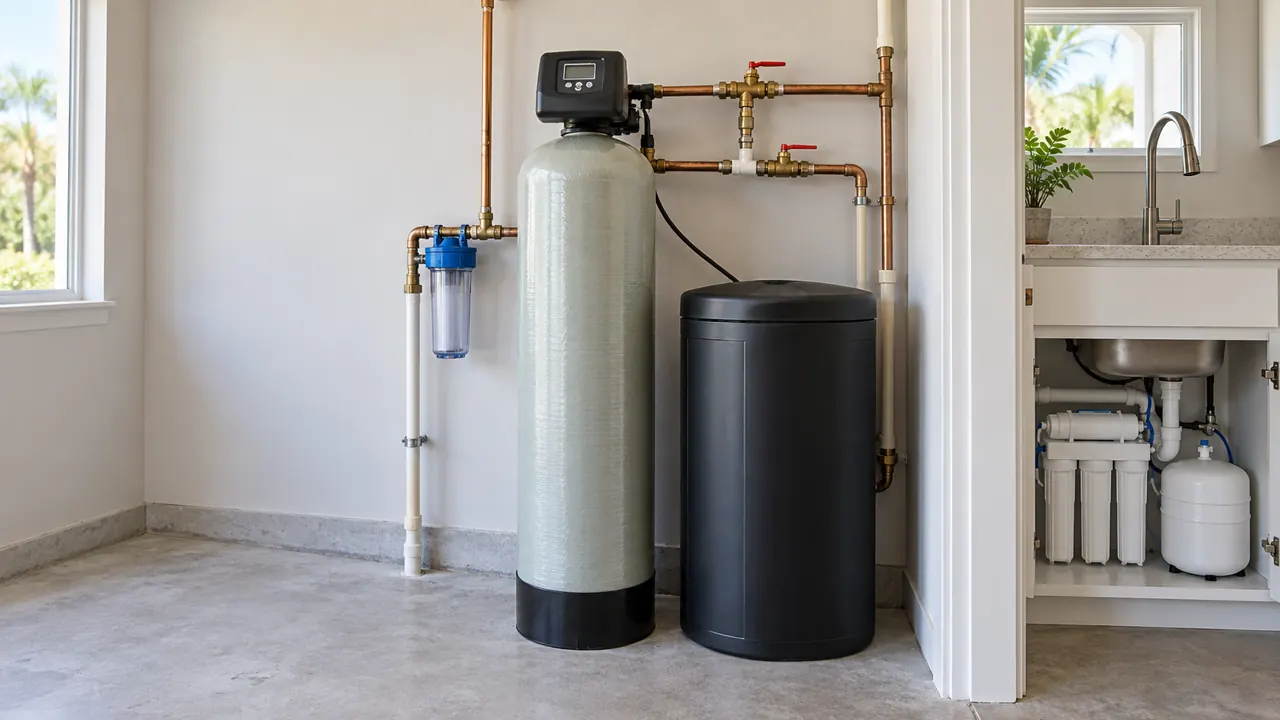
For a Port St. Lucie homeowner, a softener that no longer reduces measured hardness and a filter with growing pressure loss are distinct service questions. Keep the equipment models and service dates, describe where the symptom appears and ask for a diagnosis before choosing replacement. Start with the current fault and maintenance history before comparing a replacement installation.
The City publishes a 2025 Water Quality Report, released June 1, 2026, with monitoring generally from January through December 2025. It supplies context for the named public system, not a measurement after a home’s own treatment equipment. Confirm the actual supplier before using it. If the household uses a private well, choose property-specific laboratory guidance instead.
Simple Water Service publishes a Port St. Lucie service-area page and accepts system assessment requests. Its actual published phone and request form are available here. Coverage, equipment support, scheduling and the diagnostic or installation scope are confirmed by the provider for the property. No same-day repair, emergency dispatch, local office or stock availability is promised by this guide.
Confirm the supplier on the property water bill. Port St. Lucie’s public report applies to its Utility Systems customers; a mailing address does not prove supplier, and a private well needs its own testing. See the Port St. Lucie source guide before applying a report or selecting a treatment goal.
A decision sequence, not a prescribed installation
Find out why the existing system is no longer controlling hardness.
Compare continued repair with a correctly sized replacement.
Define hardness, household demand and the installation scope before selecting equipment.
Use measurements to separate a true performance problem from an unrelated symptom.
A tank that contains salt may still fail to make usable brine.
Record the operating condition before deciding which component needs repair.
Write down the main concern in ordinary language: scale on fixtures, a recurring odor, visible particles, poor drinking-water taste, a softener that no longer performs or an existing filter that needs service. Then record where it appears. One kitchen faucet, all cold taps and only the hot-water side are different clues. A photograph and a short timeline can be useful, but neither identifies every substance or replaces the measurements needed for equipment selection.
The useful first conversation connects the symptom to the water source, existing treatment and the decision that needs to be made. If the objective is drinking and cooking water at one tap, compare a point-of-use option before adding equipment to the entire home. If confirmed hardness affects several fixtures or appliances, compare softening. If the household has a private well, keep laboratory sampling and source inspection in the plan before deciding which combination of stages is warranted.
Routine service, diagnosis and installation are different requests. A maintenance visit might replace a specified cartridge, inspect a control valve or check settings. A repair visit should identify the failing component and explain the evidence for the proposed fix. Replacement should address an identified limitation, unsupported model or a repair comparison that no longer makes sense. The age of a vessel, by itself, does not tell you which option is best.
Bring the complete model numbers, last-service dates and any existing results. Ask whether the diagnostic charge is separate from parts and labor, whether additional work needs approval and what will be checked afterward. If two proposals differ, compare them against the same measured goal and household demand. A lower equipment price can omit drain work or removal, while a larger package can add stages without giving each one a justified job.
A conventional softener primarily removes calcium and magnesium hardness through ion exchange. It is not automatically a solution for every taste, odor or laboratory finding. Whole-home filtration uses particular cartridges or media for stated purposes; sediment capture and carbon reduction are different functions. A point-of-use reverse-osmosis system serves drinking or cooking water through a membrane and supporting stages and does not treat every shower or appliance. Private-well treatment can involve several roles, but only the actual findings and operating conditions justify the sequence.
Ask for the exact complete-system model and the supported claim that matches your goal. A certification logo without the listed model and target is incomplete evidence, and a component listing does not necessarily certify the assembled installation. The NSF guide to filter standards explains why standards and reduction claims differ. Do not judge a proposal by the number of tanks, cartridges or stages alone.
Daily treatment capacity and performance during simultaneous demand are separate questions. List the fixtures likely to run together, available service pressure and the source's flow capability. Ask the installer to state the assumptions behind the selected equipment, its rated service flow, pressure drop, capacity and any contact-time requirement. Bedrooms or household head count can help describe use, but they are not a complete design method.
A private-well pump and pressure tank may impose additional constraints. Some media tanks need a backwash flow that is different from their service flow. Confirm that the source and drain arrangement can support the cleaning cycle. An undersized or obstructed filter can restrict the home; equipment that cannot regenerate or backwash as specified may lose its intended performance. A larger tank is not automatically the answer without this review.
Ask where water enters, what line will be treated, whether irrigation stays separate and where isolation and bypass points will be located. Depending on the selected equipment, the scope can involve a drain and air gap, electrical supply, weather protection, tank support, faucet installation or a refrigerator line. A preexisting loop can be helpful, but it still needs inspection. Do not assume it provides the right drain, access or capacity for a replacement system.
Service clearance matters after the installation photograph has been taken. There should be room to load salt, change cartridges, inspect the valve and access labels without dismantling unrelated fixtures. The provider should explain any permitting or professional work required for the actual property. Compare equipment, labor, plumbing changes, removal and disposal, optional additions and startup verification as separate items rather than accepting an undefined installed package.
Retain the model numbers, replacement part numbers, final settings, instructions and dated service notes. Use the manufacturer's requirements and relevant performance measurements to plan cartridge, membrane, resin, media or valve care. These are different components with different intervals and triggers. A generic promise of no maintenance should prompt questions about what is excluded and how performance will be confirmed over time.
Choose the post-work check before agreeing to the job. Hardness readings are relevant to softening; pressure and flow are relevant to a restriction; membrane output and the specified claim matter for RO; a well-treatment design may require laboratory verification of its target. Clear water, a new tank or a successful service visit is not one universal proof of water safety. If the agreed result is not reached, investigate the cause before adding another stage.
A limited field screening can help with a hardness or equipment decision. A certified laboratory panel answers a different set of questions and requires the correct sampling instructions and interpretation. Ask which tests are included, the sample location, method, units, price and whether follow-up sampling is recommended. A free sales demonstration should not be assumed to provide a complete safety analysis, and a TDS display is not a bacteria test.
On a private well, use EPA's well-owner guidance and local public-health resources when deciding what to sample and how to respond to a finding. Changes after flooding, repairs or nearby activity can warrant a new investigation even when treatment is already installed. For utility water, start with the correct supplying system's report and account. Neither a city name nor an irrigation well establishes what reaches the household taps.
Choose the guide that matches the current concern, then describe the property source if known, where the symptom appears and the existing equipment. Include model numbers and recent service dates rather than sensitive health information. Simple Water Service receives the request and confirms property coverage, availability, diagnostic or assessment scope and written terms directly. Submitting a request does not reserve an appointment or promise a particular repair.
Use the educational water check when the starting point is unclear, the solutions hub to compare specific service questions or the local source guide to separate supplier evidence from a private well. An assessment is most useful when it gives you the measurements, options and verification criteria that can change the recommendation.
by Simple Water Service
Share the source, main concern and existing equipment. The provider confirms coverage, availability and the written scope for the actual property.
Call (561) 309-6270A request asks for contact; it does not reserve an appointment.
If the form does not load, open the quote form.